Intangible Cultural Heritage Day: How Did People Dance in the Old Days? [Icelandic]
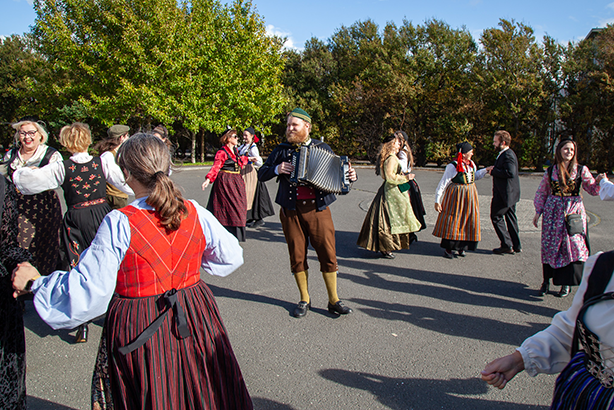
On Intangible Cultural Heritage Day, Saturday, 17 October, folklorist Atli Freyr Hjaltason will explore dance culture in Iceland in earlier centuries and how dances appear in historical sources and living tradition. This will be a lecture with a difference: during the talk, visitors will be taught the dances being discussed and invited to take part.
The earliest sources on dance in Iceland are found in manuscripts, including the Sagas of Icelanders and other early texts. These descriptions, however, provide little detail, and it is not until well into the 19th century that more substantial descriptions of dances begin to appear. But how far back can we go? The lecture will focus on the period 1750–1850, examining the principal sources on dance in Iceland from this period, as well as the music and movements associated with the dances.
In 2023, UNESCO designated 17 October as a day dedicated to intangible cultural heritage. Intangible cultural heritage refers to the living traditions, customs, practices, knowledge and skills of communities that are passed down from one generation to the next. In Iceland, increasing emphasis has been placed on intangible cultural heritage in recent decades, including in connection with the 2003 UNESCO Convention for the Safeguarding of the Intangible Cultural Heritage. An inventory of Iceland’s intangible cultural heritage can be found on the Living Traditions (Lifandi hefðir) website.
Admission to the event is included with a museum ticket. Please note that a museum ticket also serves as an annual pass, providing admission to all museum exhibitions and events for one year from the date of purchase. Admission to exhibitions and events is free for children under the age of 18.